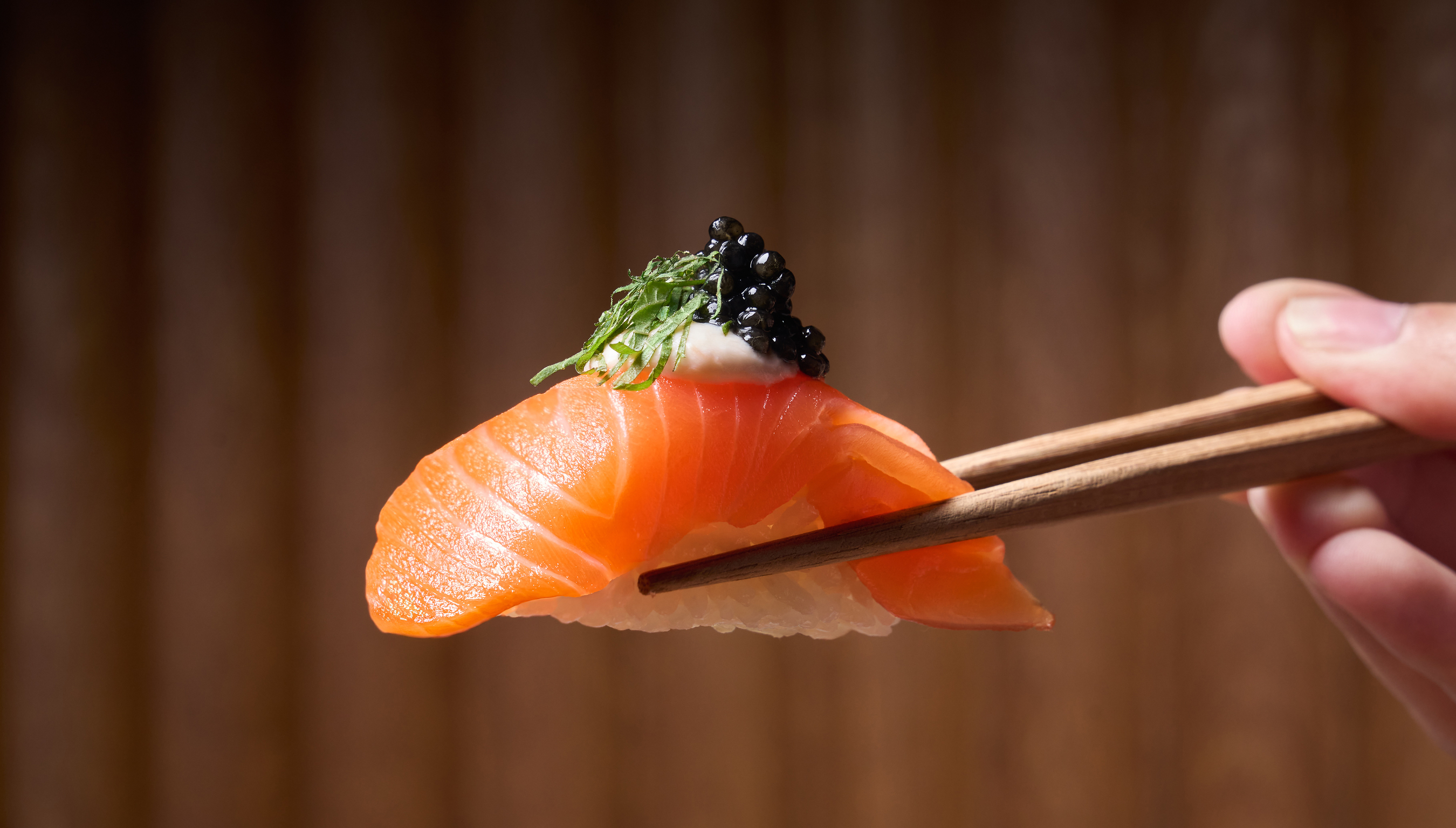
Miami-born OMAKAI is making its biggest geographic move since its 2019 Wynwood debut, signing leases for two Chicago locations and an Orlando outpost while also expanding its Brickell presence — the most aggressive unit-growth period in the accessible-omakase brand's seven-year history.
The Chicago Footprint
The brand will open a 66-seat flagship OMAKAI sushi location at 951 W Fulton Market, anchored on the first floor with a basement bar. A second, more compact OMAKAI hand roll bar — 30 counter seats — will follow at 507 N Wells Street in River North. Both units are scheduled to debut before the end of 2026 and will run lunch, happy hour, and dinner dayparts. OMAKAI's 'Homeakase' takeout sushi boxes will be available for off-premises via UberEats at both addresses, giving the brand a delivery revenue layer from day one in the new market.
The dual-format strategy mirrors what OMAKAI has refined across South Florida: a larger sit-down sushi bar concept alongside a nimbler hand roll bar that can operate in tighter real estate. That flexibility has become a meaningful unit-economics tool for emerging foodservice brands navigating high-rent urban corridors like River North.
Florida Depth and New Markets
Beyond Chicago, OMAKAI has signed its first Orlando lease, adding a third Florida market to a footprint that already spans Wynwood, Coconut Grove, Doral, Aventura, and Downtown Miami. Brickell will also receive both a new OMAKAI sushi location and a hand roll bar, deepening the brand's density in Miami's highest-traffic dining district.
The concurrent multi-market push — one new state, one new city, multiple new Florida units — signals that OMAKAI has moved from neighborhood concept to scalable regional chain. Founded by brothers Diego and Pedro Quijada with partner Nicolas Sayavedra and Chef Aaron Pate, the brand has built its following around what it calls Omotenashi-style hospitality: warm rice, crispy nori, chef-selected nigiri, and an omakase price point accessible to casual diners rather than only special-occasion guests.
"Expanding beyond Florida for the first time is a defining moment for everyone who has been part of the OMAKAI journey," said Diego Quijada, founder and CEO of OMAKAI. "We can't wait to introduce a whole new community to accessible omakase."
What It Means for the Channel
The accessible-omakase segment has drawn steady traffic from younger urban consumers who want experiential dining without the $300-per-head price tag of traditional omakase counters. For foodservice and hospitality operators tracking fast-casual expansion trends, OMAKAI's dual-concept playbook — full-format plus express hand roll bar — offers a replicable template for entering dense urban markets at different investment thresholds.
The Chicago market is already a competitive proving ground for upscale-casual Japanese concepts, making OMAKAI's Fulton Market placement a high-visibility test of whether the brand's South Florida momentum translates. Operators and restaurant real estate watchers will be tracking whether the hand roll bar format in River North, with just 30 seats, can generate the throughput needed to justify a premium Chicago lease. Exact opening dates, hours, and reservation details are expected in the coming weeks.
Written by Michael Politz, Author of Guide to Restaurant Success: The Proven Process for Starting Any Restaurant Business From Scratch to Success (ISBN: 978-1-119-66896-1), Founder of Food & Beverage Magazine, the leading online magazine and resource in the industry. Designer of the Bluetooth logo and recognized in Entrepreneur Magazine's "Top 40 Under 40" for founding American Wholesale Floral, Politz is also the Co-founder of the Proof Awards and the CPG Awards and a partner in numerous consumer brands across the food and beverage sector.