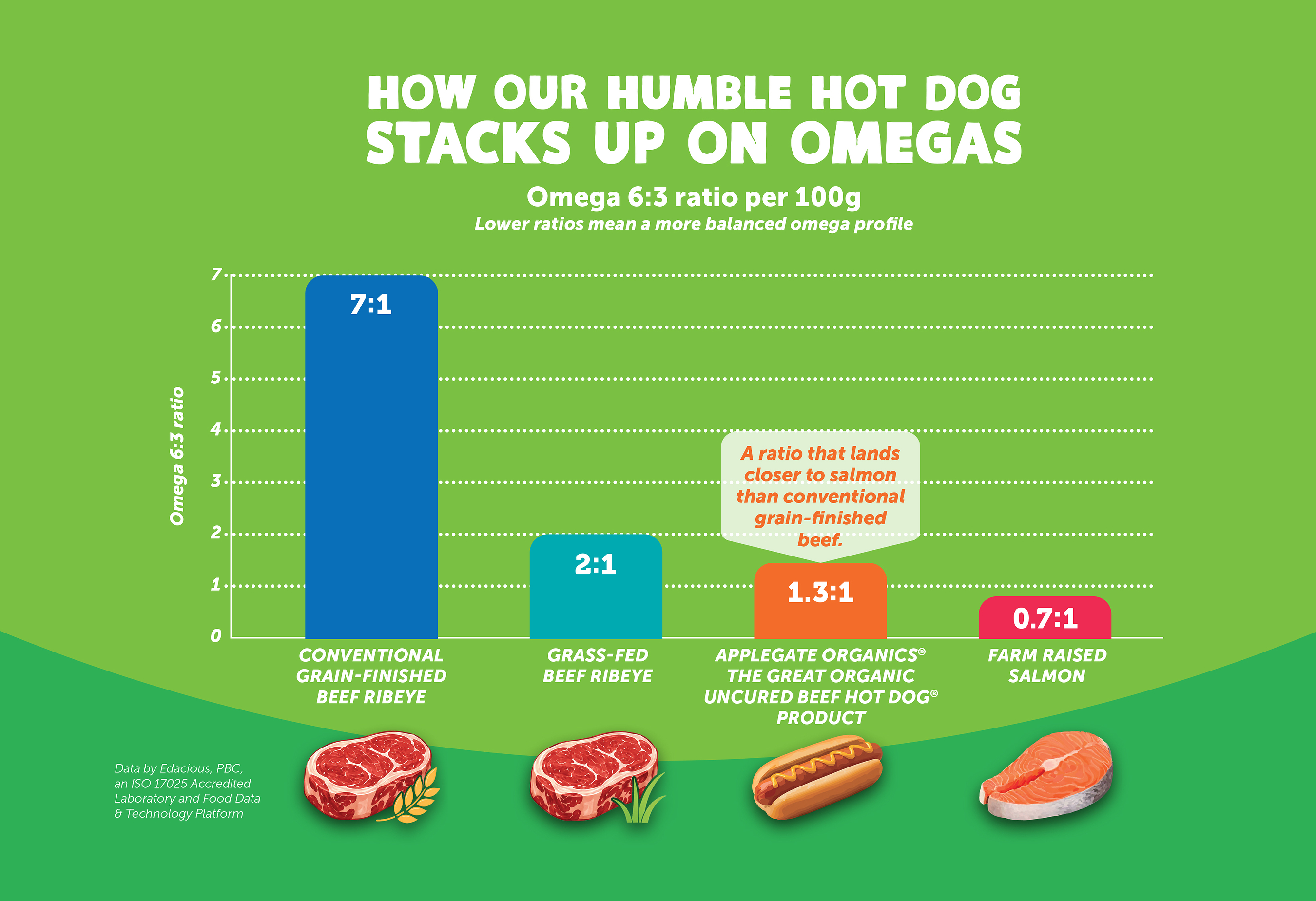
Applegate Farms, the natural and organic meat brand and Hormel Foods subsidiary, has released omega fatty acid test results for its Regenerative Organic Certified all-beef hot dogs, finding an omega-6 to omega-3 ratio of 1.3:1 — a figure the company says is markedly lower than what independent data show for conventional grain-finished beef.
The findings come from Edacious, an ISO-accredited laboratory and food data platform, which analyzed fatty acid composition across several protein sources on behalf of Applegate. Conventional grain-finished beef registered a 7.0:1 omega-6 to omega-3 ratio in the same dataset, while grass-fed beef came in at 2.0:1. Farm-raised salmon, often cited as a benchmark omega-3 source, posted a 0.7:1 ratio with substantially higher absolute fatty acid levels.
The Research Backstory
The hot dog testing is part of Applegate's Regenerative Health initiative, a broader research program examining whether agricultural practices — specifically regenerative and grass-fed systems — measurably alter the nutritional profile of the food produced. The company also funded a separate study on cattle production practices and beef nutrient composition and is preparing a human health study — comparing consumption of organic grass-fed beef versus conventionally raised grain-fed beef — for peer review.
"At Applegate, we have long believed that how food is raised matters," said Joseph O'Connor, president of Applegate. "Through Regenerative Health, we are asking an additional question: How might those practices influence the nutritional characteristics of the food people eat?"
Carolyn Gahn, senior director of mission and advocacy at Applegate, framed the effort as a data-generation exercise rather than a finished conclusion: "Our goal is to contribute credible data and support research that helps connect those dots."
Why It Matters for Foodservice Buyers
For c-store operators and foodservice buyers sourcing roller grill and grab-and-go protein programs, the Applegate data arrive at a moment when better-for-you positioning is increasingly relevant to driving inside-sales mix in the fresh and prepared category. Consumers are scrutinizing protein sourcing across all channels, and attribute-based claims — grass-fed, regenerative, organic — have become differentiators in foodservice programs as chains look to premiumize their back-of-house offerings.
Some nutrition researchers suggest the modern Western diet may contain an omega-6 to omega-3 ratio as high as 20:1, according to published literature Applegate cited. Omega-3 fatty acids are associated with cardiovascular, circulatory, endocrine, and brain health; because omega-6 and omega-3 fats compete for the same conversion enzymes, nutritional scientists increasingly track the ratio alongside absolute amounts.
The beef in Applegate's all-beef hot dogs is 100% grass-fed, pasture raised, and certified regenerative. The company plans to continue testing its certified regenerative beef for omega fatty acids and additional nutritional characteristics, with findings detailed in its 2025–26 Mission Report. The broader natural and organic meat category continues to attract investment from both brand operators and retailers seeking to capture health-motivated purchase occasions across the store perimeter and prepared foods sets.
Written by Michael Politz, Author of Guide to Restaurant Success: The Proven Process for Starting Any Restaurant Business From Scratch to Success (ISBN: 978-1-119-66896-1), Founder of Food & Beverage Magazine, the leading online magazine and resource in the industry. Designer of the Bluetooth logo and recognized in Entrepreneur Magazine's "Top 40 Under 40" for founding American Wholesale Floral, Politz is also the Co-founder of the Proof Awards and the CPG Awards and a partner in numerous consumer brands across the food and beverage sector.